
PHILOSOPHY & BIO
The Art of Material Paradox: Avant-Garde Functional Sculptures
This space serves as the convergence point for plastic illusion and master artistic craftsmanship.
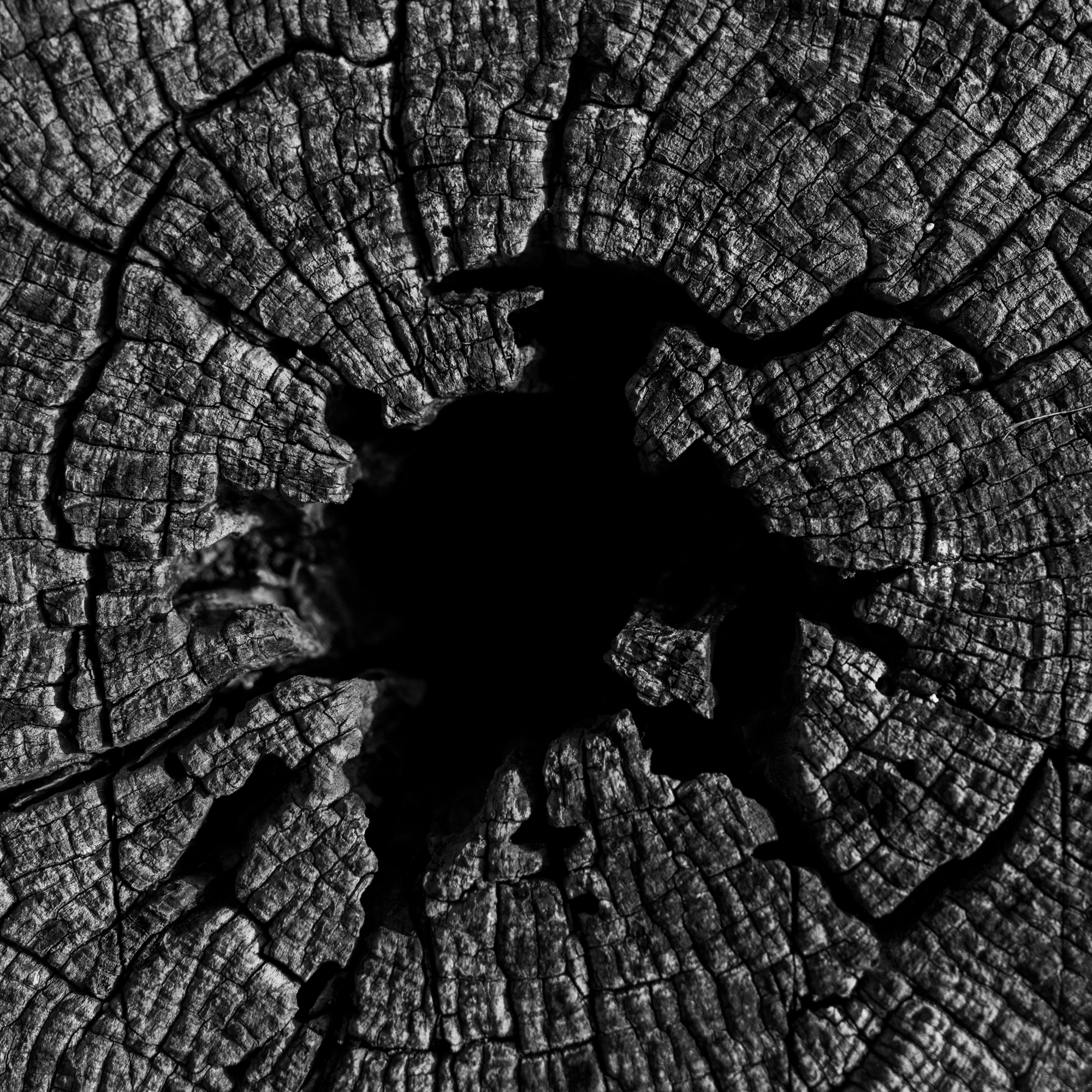
Each collection is rooted in the practice of contemporary Trompe-l’œil: a conceptual inquiry designed to deceive the perceptive system, thereby redefining how the body experiences space. Through an obsessive, taxonomic study of organic forms, the primordial strength of nature – the roughness of stone, the poetry of charred wood (faux bois), the density of bark – is codified into functional, collectible sculptural works.
The Duality of Matter: Artistic Research
Materials are not merely replicated; they are sublimated through rigorous manual manipulation processes that trigger a profound sensory short-circuit:
– Elastomeric Polyurethane (The Corporeal Paradox): Blocks of flexible polyurethane are directly sculpted by hand, translating the visual memory of wood or stone into unprecedented volumes. To the eye, the work projects a monumental, severe authority, yet to the touch, it reveals an unexpectedly welcoming flexibility. This tactile art dismantles the inherent rigidity of traditional design.
– Technical Concrete (Mineral Monumentalism): Advanced cementitious formulations and layered artistic patinas are meticulously modeled to capture the solemnity of living rock and woods. These bespoke surfaces preserve the rich textures, geologic rigor, and raw visual temperature of the mineral world.
Intrinsic Value and Collectible Authenticity
Each creation stands as a unique, unrepeatable specimen, radically antithetical to mass industrial production. The entirety of the creative cycle, from the initial rough-hewing of the volume to the final pictorial patination, is the result of an unrepeatable artistic gesture.
Destined for private collectors, cultural institutions, curators, and high-profile architectural projects, these works are officially registered and accompanied by a Certificate of Authenticity, hand-signed and numbered by the artist, confirming their placement within the contemporary art and collectible design market.
Nino Migazzi – Biography
The artist’s path of research and expression is an organic, cosmopolitan evolution shaped by international travel, structural rigor, and an unceasing experimentation with matter.
The foundations of his practice lie in his early technical training in surveying and geometry, which instilled a profound understanding of volume and architectural design. This innate discipline and precision were further consolidated during his service in the Italian Army and subsequent high-level private security roles in London. It was in the British capital that his lifelong fascination with architecture and visual culture coalesced into formal studies in Interior Design.
Driven to explore new aesthetic dimensions, he relocated first to the Canary Islands and then to Marbella, Spain, fully immersing himself in the luxury outdoor furniture sector. In Andalusia, he managed high-end design operations, orchestrating international exhibitions, directing showrooms, and shaping corporate identity. During this period, a pivotal journey to France marked a definitive turning point: his encounter with the historic heritage of faux bois inspired him to begin drafting and designing furniture born entirely of his own creative vision.
Just as his international career culminated in an offer to serve as a Project Manager in the United States for a prestigious Italian firm, the artist chose the path of creative independence. Turning down the position, he returned to Trentino, Italy, to establish his own atelier and forge an autonomous artistic language.
This homecoming initiated a period of radical material investigation. The author mastered and pushed the boundaries of polystyrene, fiberglass, resins, traditional woodworking, and carbon fiber via infusion techniques, while developing proprietary innovative compounds such as engineered composite marble. In 2024, his artistic vision crystallized through a modern reinterpretation of faux bois applied to ferrocement architecture.
The definitive synthesis came in 2025 with his discovery of elastomeric polyurethane. By conceiving the idea of replicating the raw grandeur of natural elements while rendering them unexpectedly soft, warm, and welcoming to the touch, the artist codified his current and future manifesto: creating functional sculptures capable of triggering a profound, unforeseen sensory short-circuit.

 English (UK)
  Italiano